The largest shock the film industry has witnessed in 2025? The comeback of horror as a dominant force at the UK box office.
As a category, it has remarkably exceeded previous years with a 22% year-on-year increase for the British and Irish cinemas: £83,766,086 in 2025, against £68 million the previous year.
“Last year, no horror film reached £10m at the UK or Irish box office. This year, five films have,” comments a film industry analyst.
The major successes of the year – a recent horror title (£11.4m), Sinners (£16.2 million), The Conjuring Last Rites (£14.98m) and the sequel to a classic (£15.54m) – have all stayed in the multiplexes and in the public consciousness.
Although much of the industry commentary highlights the standout quality of prominent auteurs, their achievements indicate something shifting between audiences and the category.
“Many have expressed, ‘You should watch this even if horror isn’t your thing,’” explains a film distribution executive.
“Films like these play with genre and structure to create something completely different, and that speaks to an audience in a different way.”
But apart from creative value, the steady demand of frightening features this year suggests they are giving moviegoers something that’s greatly desired: therapeutic relief.
“Currently, cinema mirrors the widespread anger, fear, and societal splits,” notes a film commentator.
“Horror films are great at playing into people’s anxieties, while at the same time exaggerating them. So you forget about your day-to-day anxieties and focus on the monster on the screen,” says a respected writer of vampire and monster cinema.
Against a current events featuring conflict, immigration issues, political shifts, and climate concerns, ghosts, monsters, and mythical entities strike a unique chord with viewers.
“It’s been noted that vampire cinema thrives during periods of economic hardship,” states an actress from a successful fright film.
“It’s the idea that capitalism sucks the life out of people.”
From film's inception, societal turmoil has shaped horror.
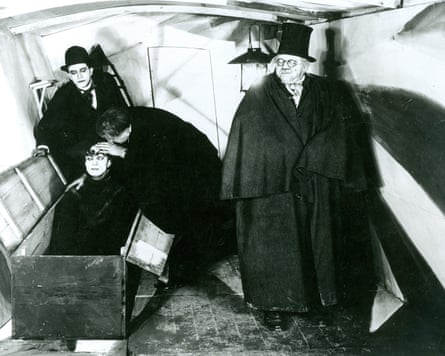
Experts point to the boom of early cinematic styles after the first world war and the chaotic atmosphere of the 1920s Europe, with features such as early expressionist works and Nosferatu: A Symphony of Horror.
Subsequently came the Great Depression era and classic monster movies.
“Take Dracula: it depicts an Eastern European figure invading Britain, spreading a metaphorical infection that endangers local protagonists,” notes a commentator.
“Therefore, it embodies concerns related to foreign influx.”
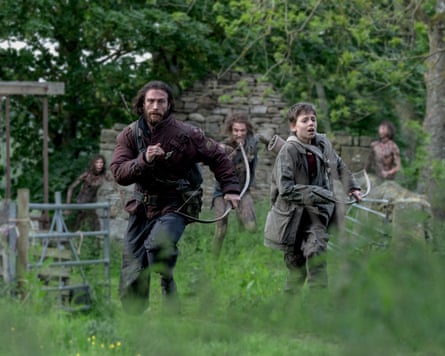
The phantom of migration inspired the newly launched rural fright The Severed Sun.
The creator explains: “I aimed to delve into populist rhetoric. Specifically, calls to restore a mythical past that favored a privileged few.”
“Also, the concept of familiar individuals revealing surprising prejudices in casual settings.”
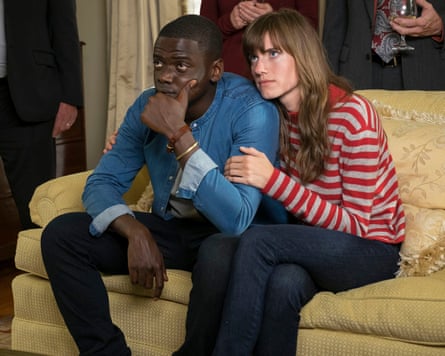
Perhaps, the present time of acclaimed, socially switched-on horror commenced with a brilliant satire launched a year after a divisive leadership period.
It introduced a fresh generation of innovative filmmakers, including various prominent figures.
“Those years were remarkably vibrant,” comments a filmmaker whose movie about a murderous foetus was one of the period's key works.
“In my view, it marked the start of a phase where filmmakers embraced wildly creative horror with artistic ambitions.”
The director, currently developing another scary story, continues: “In the last ten years, public taste has evolved to welcome bolder horror concepts.”
At the same time, there has been a reconsideration of the overlooked scary films.
In recent months, a new cinema opened in the capital, showing cult classics such as The Greasy Strangler, a classic adaptation and the modern reinterpretation of the expressionist icon.
The renewed interest of this “gritty and loud” genre is, according to the venue creator, a clear response to the algorithmic content produced at the box office.
“This responds to the sterile output from major studios. Today's cinema is safer and more repetitive. Many popular movies feel identical,” he says.
“On the other hand, [these indie works] feel imperfect. They seem to burst forth from deep creativity, free from commercial constraints.”
Fright flicks continue to challenge the norm.
“These movies uniquely blend vintage vibes with contemporary relevance,” observes an expert.
Alongside the re-emergence of the insane researcher motif – with two adaptations of a well-known story on the horizon – he forecasts we will see scary movies in the near future reacting to our modern concerns: about artificial intelligence control in the coming decades and “vampires living in the Trump tower”.
At the same time, a biblical fright story The Carpenter’s Son – which depicts the events of biblical parent hardships after the messiah's arrival, and stars celebrated stars as the divine couple – is planned for launch later this year, and will certainly cause a stir through the religious conservatives in the America.</


